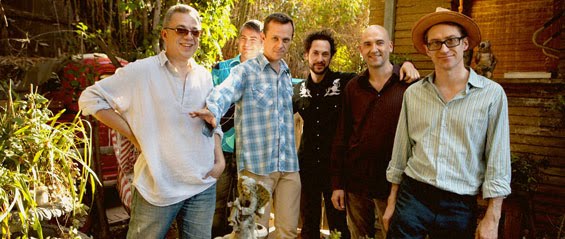
We Were Promised Jetpacks Scottish Group Goes More Post-Rock Than Post-Punk on Latest LP By Andrew Clayman Published in The Nashville Scene, March 2012
Trapped in a touring van somewhere in backwoods Missouri with a barely functional cell phone, Sean Smith seems surprisingly uninterested in discussing the “Scottish underdog mentality.”
“I don’t really relate to that concept, to be honest,” he says, and the subsequent sigh says a lot. As the bassist for the Glasgow-via-Edinburgh outfit We Were Promised Jetpacks, Smith has likely grown a tad bored of his band’s perpetual association with the current wave of high-intensity indie-rock coming out of Scotland—a pack populated by the earnest likes of Frightened Rabbit and The Twilight Sad. Yes, the Jetpacks came up idolizing those groups, and yes, they’re quite pleased to now call them friends. But as they trek across America in support of their sophomore album In the Pit of the Stomach, Smith and his bandmates won’t be ringing up their forbearers for any Scotsmen survival tips.
“Yeah, we don’t really talk to those guys about stuff like that,” Smith says. “We still have great respect for those bands and stay in touch, but it’s more likely we’ll just talk to them about football or something.”
In fact, aside from meaning “soccer” when they say “football,” there’s nothing particularly UK-centric about We Were Promised Jetpacks these days. Aided by steady touring and some savvy TV licensing deals on shows as disparate as One Tree Hill and Sons of Anarchy, singer/guitarist Adam Thompson’s raw, heart-on-the-sleeve tunes have resonated with American audiences since the band’s 2009 debut, These Four Walls. And that record sounds like a fly-by-night basement recording compared to the scope and ambition of In the Pit of the Stomach.
“Yeah, it was definitely kind of a night and day thing between the two,” Smith says. “Obviously the production is much better [on In the Pit of the Stomach]. And being in a real studio, we had two weeks in there to work out our parts and how everything could fit together—rather than basically playing live off the floor like the first record. I can’t really think of anything that wasn’t better this time around, except that it cost a hell of a lot more money [laughs].”
Released last fall, In the Pit’s bigger budget also revealed a notable shift toward a more American brand of moody angst; be it the inspired adrenalin rush of Jimmy Eat World (whom the Jetpacks toured with in 2010) or the more deliberate, crescendoing post-rock of Explosions In the Sky (tour mates for part of this upcoming U.S. leg).
The influence of the latter band—a veteran instrumental act out of Austin-- is particularly evident on new WWPJ tracks like “Keeping Warm” and “Act on Impulse,” which give their melodies a lot of elbow room for the atmospheres to swirl around and sink in. It’s probably not a coincidence, then, that Smith mentions playing with Explosions In the Sky as one of things he is most looking forward to on this spring tour.
“They’re definitely one of our favorite bands,” he says. “Our tour manager, Esteban [Rey], does a lot of the artwork for them, so he kind of introduced us to their music a while back. I had heard of them but didn’t really know their stuff. Now we’re all huge fans.”
The Jetpacks were also in Explosions in the Sky’s hometown earlier this month, making the rounds at South By Southwest. On one hand, this is hardly a unique way for an indie band to promote itself. But as Smith sees it, We Were Promised Jetpacks are not a band with the agenda of being the “next big thing” anyway. It’s more about mixing it up, shaking off regional misconceptions, and finding new fans, wherever they may be.
“I don’t really think it matters at all where you’re from anymore. A lot of times you have Scottish bands that come over to the States and do well, and they can’t catch a break back home. So you never know. It’s a very gradual thing, I suppose, and right now we’re quite happy. I don’t think any of us are hoping for that one big hit where you’re playing to bigger crowds but they only want to hear the one song, you know? So we’re pleased to just keep doing what we’re doing, get to work on the next album, and see what happens next.”
Who Framed Frightened Rabbit? Though Opening for Death Cab, Scrappy Scottish Rockers May Steal the Show By Andrew Clayman Published in The Nashville Scene, August 2011
There are generally two types of rock bands that get to play 20,000-seat basketball arenas: (a) wildly popular, platinum-selling recording artists, and (b) the opening acts for wildly popular, platinum-selling record artists. This summer, Scottish indie outfit Frightened Rabbit is joining the latter camp—serving as the undercard for the unlikely commercial juggernaut known as Death Cab For Cutie. But as is often the case in these sorts of arrangements, the tour’s more inspiring act is not necessarily the one topping the bill.
“I actually like being the underdog,” says Scott Hutchinson, who formed Frightened Rabbit as a solo project in 2003 and has since watched it grow to a five-piece. “A lot of things about being an opening act kind of appeal to a Scottish sensibility, you know? We’re a small band from a small country, but we still have this opportunity to just make a blast of the 40 minutes we’re given, and I love doing that. Taking on that sort of challenge in front of a new crowd is quite gratifying.”
Of course, opening for a big-name band is also an ancient rock n’ roll rite of passage. Back in 2004, Death Cab themselves (at a creative peak) opened for Pearl Jam on the “Vote for Change” tour—a string of arena shows that did a lot more for Ben Gibbard than they did for John Kerry. Within months, the Pacific Northwest’s most huggable indie band had inked a deal with Atlantic Records, igniting their widespread takeover of America’s dorm rooms.
On the surface, it would appear that Frightened Rabbit has set about following that same blueprint. After three acclaimed albums on the independent Fat Cat label, Hutchinson and his mates signed to Atlantic last December and have spent the majority of 2011 working on the band’s major label debut. This North American tour with Death Cab, then, is a coming out party of sorts—graduating from the cozy confines of the Exit/In to the bright lights of the Bridgestone Arena.
“Oh, it’s a massive deal for us,” says Hutchinson. “You know, the first tour we did with Death Cab [in 2008] was in Europe and the UK, and their notoriety is just a bit less over there, so it was a smaller scale. In the U.S., it’s obviously a completely different ballgame. I spent half an hour Googling all the venues we’re playing on this tour, and it was just like, ‘holy shit!’ These places are amazing!”
For Hutchinson—like a lot of people—the arenafication of the traditionally intimate and inconspicuous Death Cab For Cutie is still a bit hard to get his head around, even as it’s opening doors for Frightened Rabbit’s similar brand of heart-on-the-sleeve indie rock.
“I honestly don’t know how they’ve done it,” Hutchinson says. “But, you know, Death Cab has never really been a band that’s been forced down anyone’s throats. One of the reasons why I admire and love them is that they have taken this slow, gradual build-up over the years—almost sneaking up on people—to the point where you’re like, ‘what, Death Cab is playing arenas?!’ And I think that’s a great way of doing it. … Plus, they were on The OC, right? [laughs]”
Chuckles aside, Frightened Rabbit is probably one Gossip Girl cameo away from a mainstream breakout of their own. And while Death Cab is slowly losing some of the warmth and sensitivity of their earlier work, Hutchinson and his bandmates are hitting their stride—tackling heartbreak and frustration with much greater urgency and determination than the wistful Gibbard and Co. ever did.
2008’s ex-girlfriend exorcism The Midnight Organ Fight was a powder keg of an LP; full of unbridled energy, hooks galore, and clever, confessional wordplay— somewhere between Ted Leo and Arab Strap on the blood-pumping scale. Its follow-up, The Winter of Mixed Drinks (2010), found Hutchinson astutely switching gears into more positive, less personal territory, with a Technicolor grandness more in the vein of The National or Arcade Fire. By no coincidence, Frightened Rabbit’s reputation as a leading indie act was solidified, easing the pressure a bit for their next effort.
“Yeah, now the doors are completely open for us in a lot of ways,” says Hutchinson, noting that the new album is taking shape in a much more collaborative manner than its predecessors, which he wrote and arranged mostly in solitude.
“I think in every writer’s life you reach that point where you feel like you might be starting to recycle ideas a bit, so it feels really new and good this time around to be working together with everybody on the process every day. And naturally, it’s sounding unlike anything we’ve done before, too, which I’m quite pleased about.”
Frightened Rabbit won’t have the new record in the can for a while yet, but to win over the Death Cab faithful, Hutchinson knows it’s the energy of their live show—more than any recording—that sets his band apart.
“Every show, we owe it to people to give everything we have. Even in a big venue, we’re going to reach for the back of the room—which means as much if not more energy than a small club show. It’s what the people paid for, and we never take that lightly.”
The Trashcan Sinatras @ Schubas, Chicago, June 6 by Andrew Clayman Published in Chicago Innerview, June 2010
As Scottish pop bands go, the Trashcan Sinatras have never quite enjoyed the cult status of The Pastels or Aztec Camera, let alone the mainstream recognition of Belle & Sebastian or Travis. Just the same, their sound nestles rather nicely between all four of those bands — a charismatic mix of jangly guitars, librarian’s lyrics, and mostly muscle-less melodrama.
Back in 1990, the Trashcans did make a brief college radio splash with the ironically-titled single "Obscurity Knocks", but the band’s subsequent releases went tragically overlooked even as they arguably built a bridge between Scotland’s '80s and '90s guitar-pop sounds. The band returned from an 8-year hiatus with the acclaimed 2004 LP Weightlifting and their fifth album, In the Music, is finally available in the States nearly a year after its overseas release. On stage, the Trashcan Sinatras are what Frightened Rabbit might sound like when they’re 20 years older, and much more accustomed to heartache.